Fish and Techniques
Fish and Techniques
The fish of Cape Cod Bay and the methods that catch them: striped bass, bluefish and bluefin tuna, jigging, umbrella rigs and trolling.
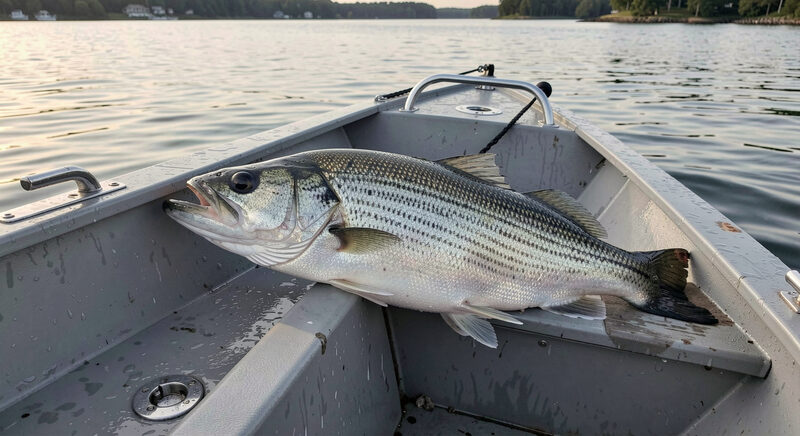
Cape Cod Bay is a shallow, cold, enormously productive piece of water, and the fishing it offers is really several different fisheries sharing one bay. There are striped bass on the flats and shoals, bluefish tearing through schools of bait in summer, bluefin tuna out in the deeper water, and a scattering of bottom fish on the rougher ground. Each has its own habits, its own season and its own way of being caught.
This section of The Billingsgate Journal is about those fish and the methods that reach them. It is written for anglers who want to understand what they are fishing for, not just where to drop a line. The guides here cover the three headline species of the bay and the working techniques that Cape Cod Bay anglers use to catch them.
The fish of the bay
The striped bass is the fish most anglers come for. It runs the shallows and the shoals, feeds on sand eels and other bait, and takes everything from a fly to a wire line jig. The guide to striped bass in Cape Cod Bay covers where they hold and how they feed.
The bluefish is the bay's other great inshore fighter. Fast, aggressive and sharp-toothed, it brings a different kind of day when a school moves in. The guide to bluefish in Cape Cod Bay looks at their habits and the tackle they demand.
The bluefin tuna is the bay's heavyweight. It appears in the deeper water in the warmer months, and chasing it is a serious undertaking that involves the right permit, heavy gear and a great deal of patience. The guide to bluefin tuna from Rock Harbor explains what that fishery involves.
The methods that catch them
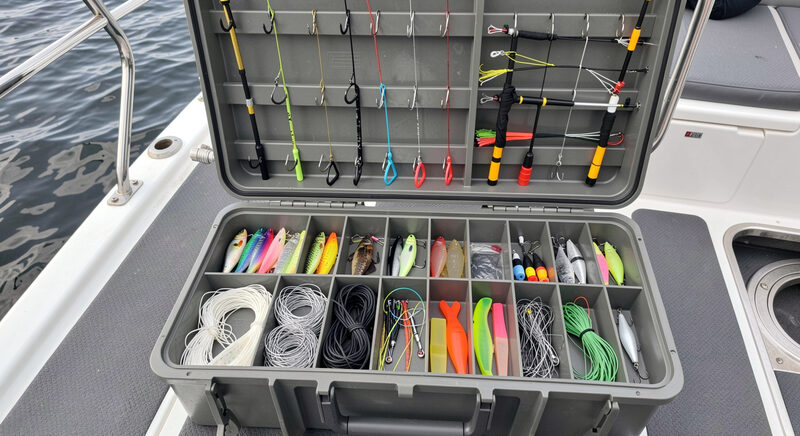
Cape Cod Bay fishing is built around a handful of methods that have been refined over decades on this water. Umbrella rigs and wire line jigs cover deep water and search for fish along the edges of the shoals. Tube and worm is a slow trolling method that suits the flats. Topwater plugs and soft plastics take fish that are up on the surface chasing bait. Trolling covers ground and finds concentrations.
No single method is best. The right choice depends on the tide, the depth, whether the fish are showing on the surface, and how much water the angler needs to search. The guide to umbrella rigs, jigs and trolling compares them and explains when each one earns its place.
Reading the water before choosing a method
Behind every method is the same skill: reading the water. On a shallow bay, that means watching the tide, the birds, the colour of the surface and the shape of the bottom. Fish position themselves along edges, where shallow meets deep and where the current is actually moving, and the angler who can see those edges on a chart and on the water has already done most of the work.
This is why the bay rewards understanding over equipment. A boat with modest tackle and a captain who knows where the tide will push bait onto a bar will usually out-fish a boat full of gear fishing blind. The guide to Billingsgate Shoals shows how that thinking applies to the bay's largest piece of structure.
The gear an angler actually needs
One of the reassuring things about fishing Cape Cod Bay is that the gear is not exotic. A visitor fishing from a charter boat does not need to buy anything, because the boat provides rods, reels, terminal tackle and bait. For an angler who wants to bring their own equipment, a general-purpose spinning or conventional outfit, a selection of jigs, plugs and soft plastics, and a spool of leader material will cover most of the inshore fishing. The specialist gear, such as wire line outfits for deep jigging or heavy tackle for tuna, is a separate investment and one that only makes sense for anglers who will use it often.
What matters more than the tackle is the ability to adapt it. A rod that is set up for light casting on the flats is the wrong tool over deep water, and vice versa. The angler who understands the depth, the tide and the mood of the fish can make a modest outfit work hard, while a boat full of expensive gear fished blindly will still struggle. On this water, knowledge beats equipment almost every time.
That is a useful thing for a visiting angler to hear, because it lowers the barrier to entry. Anyone can fish Cape Cod Bay with the gear a charter boat provides, and anyone can improve simply by paying attention to the water. The reward for that attention is not only more fish but a better understanding of a bay that is genuinely interesting to fish, shallow, tidal and full of life.
What this section covers
- Striped bass in Cape Cod Bay, habits, holding water and light tackle.
- Bluefish in Cape Cod Bay, the summer speedster and how to handle it.
- Bluefin tuna from Rock Harbor, permits, gear and patience.
- Umbrella rigs, jigs and trolling, the working methods of the bay.
From here, the reader can move to the boats and fleet section to understand how a charter day is put together on this water, or to the bay and seasons section to see how the fishing changes through the year. Between them, the three sections are meant to give an angler a working picture of Cape Cod Bay before they ever step aboard.
Fish and Techniques
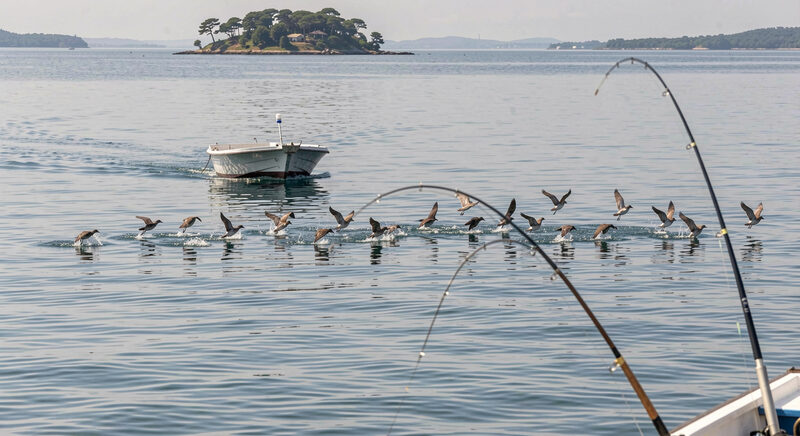
Striped Bass in Cape Cod Bay
How striped bass move through Cape Cod Bay, where they hold on the flats and shoals, and the light tackle, jigs and plugs that reach them.
A coastal migrant built for moving water.
Fish and Techniques
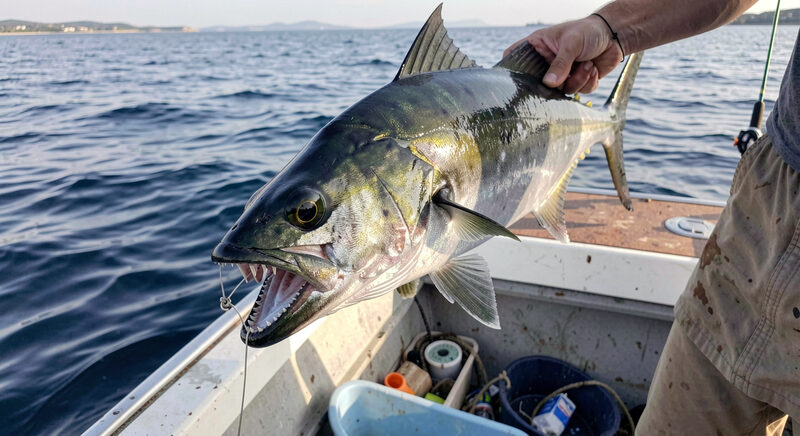
Bluefish in Cape Cod Bay
Bluefish bring fast, sharp fishing to Cape Cod Bay in summer. Learn their habits, the tackle that survives them and how to handle a catch.
Summer speed, sharp teeth and fast action.
Fish and Techniques
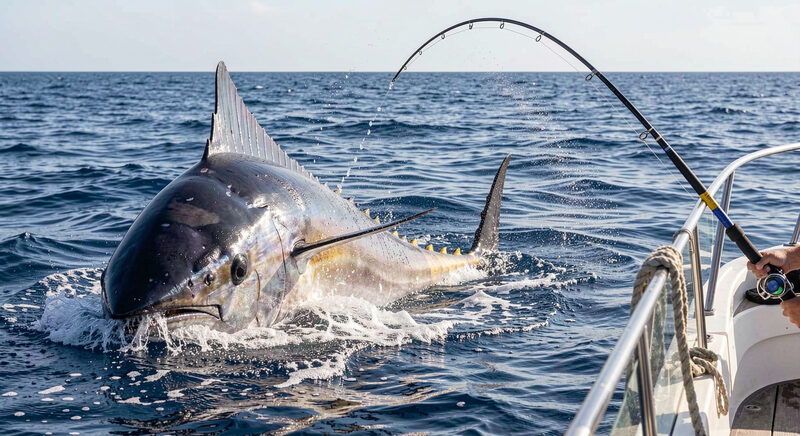
Bluefin Tuna from Rock Harbor
Chasing bluefin tuna from Rock Harbor takes the right permit, heavy gear and patience. What the fishery involves and how charters approach it.
The heavyweight of the bay, and the strictest rules.
Fish and Techniques
Umbrella Rigs, Jigs and Trolling
The working methods of Cape Cod Bay: umbrella rigs, wire line jigging, tube and worm and trolling. What each does and when anglers reach for it.
The working methods of Cape Cod Bay.