Fish and Techniques
Umbrella Rigs, Jigs and Trolling
The working methods of Cape Cod Bay: umbrella rigs, wire line jigging, tube and worm and trolling. What each does and when anglers reach for it.
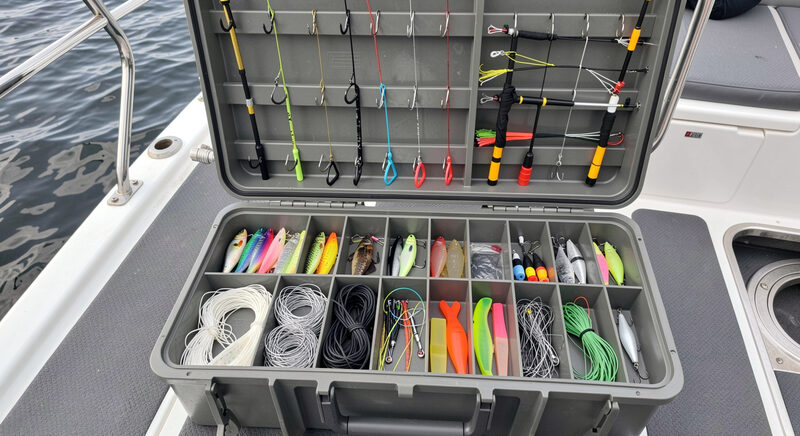
Cape Cod Bay fishing is not one technique. It is a small set of working methods that have been refined on this water over generations, each suited to a particular depth, tide and mood of fish. An angler who knows when to reach for an umbrella rig and when to pick up a light spinning rod will catch more than one who simply repeats a favourite method. This guide compares the main approaches used on the bay and explains what each one does.
Umbrella rigs
An umbrella rig is a frame carrying several lures or soft baits that together imitate a small school of fish. Trolled behind a boat, it presents the illusion of a shoal of bait, which is exactly the kind of thing a striped bass or bluefish is looking for. The rig covers water, it fishes at a chosen depth with the help of weight or a diving planer, and it is a workhorse method on the bay when fish are scattered or holding below the surface.
The trade-off is that an umbrella rig is not a subtle tool. It is heavy, it takes commitment to fish, and it tends to catch fish that are actively feeding rather than picky ones. When the bass are on the feed and spread out, few methods cover ground as efficiently. When the fish are up on the surface or holding tight to structure, the rig is the wrong answer.
Wire line jigging
Wire line jigging is a Cape Cod Bay tradition, and for good reason. By using a heavy metal line that sinks fast and stays down, an angler can work a jig along the bottom in deep water, feeling the structure and the fish. Over the edges of Billingsgate Shoals and the deeper water around it, this is one of the most effective ways to reach striped bass that are holding near the bottom.
It is also physical work. Wire line jigging demands attention and effort, and it is not a method for a casual afternoon. But it is precise in a way that trolling is not, and it lets an angler feel exactly what the jig is doing. For an angler who wants to learn the bottom of the bay, there is no faster teacher.
Tube and worm
Tube and worm is a slow trolling method in which a plastic tube threaded with a sandworm is pulled at low speed, usually on lead core line, over shallow structure. It is a quiet, patient technique that suits the flats and the edges of the shoals, and it is especially effective for striped bass that are cruising rather than blitzing.
The method is popular because it is simple and gentle, and because it catches fish when more aggressive approaches fail. It is not fast, and it does not produce the surface explosions that make the bay famous, but it is a reliable way to put a bait in front of a feeding bass in shallow water.
Trolling with plugs and spoons
Trolling is the broadest method of all. By pulling plugs, spoons or swimbaits behind a moving boat, an angler covers a great deal of water and searches for fish that are spread across a large area. On a bay as big and as featureless in places as Cape Cod Bay, that search function is valuable. Trolling also lets a boat adjust depth and speed until it finds the combination that works on a given day.
Some anglers troll fast for bluefish and some troll slow for bass, and the same boat may do both in a single trip. The method is forgiving and easy to learn, which makes it a good starting point for anyone new to the bay.
Casting to surface fish
The most exciting fishing on the bay happens when fish are up on the surface, feeding on bait that has been pushed to the top. Then casting comes into its own: soft plastics, slim swimming plugs, topwater lures and flies all take fish from a blitz, and the strikes are visible and violent. This is light tackle fishing at its best, and it is why so many anglers love the flats and the shoals in summer.
Casting to surface fish requires the ability to get within range without spooking them and the discipline to make a good presentation in a hurry. It also requires the willingness to move on when the fish sound and the surface goes quiet, because a blitz can end as suddenly as it began.
Speed, depth and the small adjustments
Whatever the method, two variables decide most of the outcome: speed and depth. Trolling too fast for the mood of the fish, or running a lure above their heads, will produce nothing even in good water. Experienced anglers treat both as things to change deliberately, slowing down, adding weight or adjusting the line until the gear is working where the fish are. On a shallow bay, small adjustments to depth often matter more than a change of lure.
Presentation matters too. A lure that runs straight and true, a jig that reaches the bottom and a tube and worm trolled at the right crawl all put the offering in front of a fish in a way it can decide to eat. The difference between a good day and a slow one is often a knot, a length of leader or a turn of speed rather than a different piece of tackle.
Choosing between them
The choice of method is really a set of questions. How deep are the fish? Is the tide running? Are they showing on the surface? How much water do I need to search? An umbrella rig answers the search question; wire line jigging answers the deep question; tube and worm answers the shallow, slow question; casting answers the surface question. An angler who can move between them as conditions change will always be better placed than one who cannot.
None of this replaces the fundamental skill of reading the water. The guide to Billingsgate Shoals shows how structure and tide come together, and the guide to striped bass explains the fish most of these methods are aimed at. For the boats that put these techniques to work, see the boats and fleet section.